
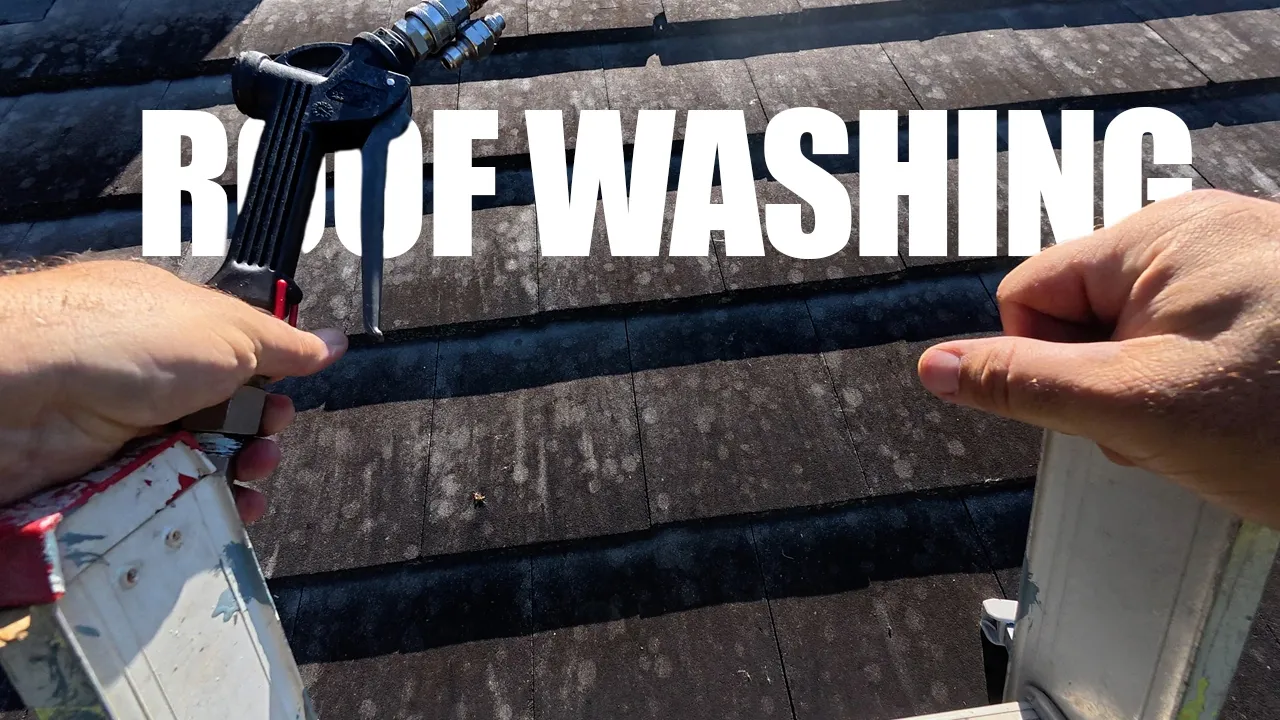
Soft Washing a Dirty Cement Tile Roof in FishHawk, FL
Watch us soft wash a FishHawk cement tile roof that was black with algae. We cover protecting the plants, the right bleach mix for tile, walking tile safely, why we don’t rinse or seal tile roofs, and what we found on the roof.
By Roy Bielewicz
This beige cement tile roof in FishHawk had gone so long without cleaning that parts of it were literally black with algae. We soft washed it with a low-pressure sodium hypochlorite mix, went over the worst sections two or three times, and took it from black back to beige, without high pressure and without rinsing.

Project at a glance
Location: FishHawk, Lithia, Florida
Roof: Two-story home with a beige cement (concrete) tile roof
Problem: Heavy black algae, worst on the front of the house, plus a few broken and slipping tiles
Method: Soft washing with a 5–6% sodium hypochlorite mix and surfactant, applied at low pressure with no rinse
Bleach used: About 50 gallons
Protecting the plants before we start
This house had no gutters except over the lanai, so everything we put on the roof would run straight off into the landscaping. Before getting on the roof, we soaked the plants, leaves, and especially the roots with plain water. Plants that are already full of water absorb much less of the runoff. We kept watering the whole time we cleaned and used a bleach neutralizer as well. Over the lanai, we put gutter bags on the only gutters so the runoff wouldn’t drain into the garden.
Several plants already had a lot of dead leaves from this winter’s unusual freezes. We took photos of them before starting so the homeowners would know that damage was already there.

Walking a tile roof safely
Cement tile is easier to walk on than terracotta, but it’s still fragile, and algae makes any tile slippery. We step where the tiles overlap the most, at the bottom of each tile and where they intersect, to avoid cracking them. We start at the bottom and work our way up, since the roof gets slick once it’s wet, and we wear boat boots made for wet surfaces. Once the algae starts to die off, the roof actually gets easier to walk on.
This section was two stories up, so we stayed well away from the edge. Most residential roofs around here don’t have anchor points for fall protection, and our liability insurance covers up to three stories, so we’re careful about where and how we work at height.
How we mix soft wash for a tile roof
We use a proportioner system that lets us control exactly how much bleach and surfactant go into the mix. Our sodium hypochlorite arrives at about 12% strength, and we dilute it to between 5% and 6% depending on how dirty the roof is. Because this roof was so dirty, we set it at 6%, which is about as strong as we typically go. Rather than mixing anything stronger, we’ll make another pass over stubborn spots. Read more about how we use sodium hypochlorite on roofs.
Tile also needs a little more surfactant than asphalt shingles. Solution runs off tile faster, and the surfactant helps the mix cling and dwell longer. Tiles are thicker, too, so we make sure to get the mix up under the bottom edge of each tile, especially at the ends of the roof. With a mix this strong, we also wear a respirator.
You could see the tiles start to change color almost immediately, and they keep lightening as the mix dwells.

Why we don’t rinse the roof
We let the soft wash keep working for as long as possible, so we don’t rinse the roof afterward. People sometimes worry that sodium hypochlorite will damage tiles or rust the nails. But we apply it at low pressure, which isn’t nearly enough to drive it up under the tiles. If moisture is reaching your nails, your roof has bigger problems than a wash, because nails should never be exposed to moisture at all.
Sodium hypochlorite also evaporates quickly in the heat, which is why your pool service has to add chlorine every week. It doesn’t sit there eating away at the tile. It can leave a little residue behind, but that rinses off with the next rain. Learn why pressure washing should never be used on roofs.
Should you seal or rejuvenate a tile roof?
We sometimes get asked to seal cement or terracotta tiles after cleaning to brighten them and keep algae away. We don’t offer it. Most of these tiles are meant to breathe. Sealing them can trap moisture and lead to spalling and flaking, which can make tiles break down faster than they would otherwise. We haven’t seen any data showing tile sealing extends a roof’s life.
We feel the same way about many roof rejuvenation products, some of which are basically soybean oil sprayed on shingles. They may make shingles more pliable, but we haven’t seen good studies showing they add years to a roof. If you know of research that shows otherwise, we’d genuinely like to see it.
Why roof cleaning matters, even during a drought
When we did this job, our area was under drought restrictions that limit pressure washing to work with a real purpose, like prepping for paint or removing a slip hazard. Roof cleaning qualifies because black algae damages your roof. It feeds on the roofing material, and some manufacturers may not honor a warranty if it isn’t taken care of. We’ve also had a number of calls from homeowners whose insurance companies flagged a dirty roof and threatened to drop their coverage. See what mold, mildew, and algae do to Florida homes.

Touch-ups, damaged tiles, and the results
Once the first pass dried, we went back over the remaining dark spots. Some sections that had been almost completely black needed two or three passes. In total, the job took about 50 gallons of bleach. A bit of residue was still drying on the beige tiles when we left, and it will wash away with the next rain.
We also found a large broken tile that someone had tried and failed to repair, along with a number of slipping tiles, probably from a recent hurricane. After every job, we send the homeowner photos of the finished roof and of any damage we find, since most people never get up there to see it. We also work with roofers we can recommend for repairs.
Need your tile roof cleaned?
We soft wash cement tile, terracotta, shingle, and metal roofs across Tampa and Hillsborough County. See our roof washing service, another tile roof soft wash transformation, or what roof cleaning costs in the Tampa region. We’ve also done stucco soft washing and patio, screen enclosure, and driveway cleaning in FishHawk. When you’re ready, request a free estimate.
Ready for a radiant clean?
Get a free, no-obligation estimate for your home or business in the greater Tampa area.
Related articles

How Much Does Roof Cleaning Cost in the Tampa Region?
Pricing for roof soft washing varies based on several conditions specific to the property. The size of the roof is the most obvious factor, but the shape and complexity of the roofline also play a role.

Dirty Roof Transformation - Soft Washing Tampa Shingle Roof
Mold and mildew turned sections of this roof completely black. Watch as we use our soft washing process to clean these dirty shingles, and bring them back to their original color.
Soft Washing a Shingle Roof | Why Pressure Washing Should Never Be Used on Roofs
Watch as Radiant Clean safely restores this Tampa-area shingle roof using our professional soft washing system - no harsh pressure, no roof damage, just spotless results.
Get in touch
Free Estimate
Ready to experience a cleaner home or business exterior? Contact us today for a free estimate.