PAVER CLEANING & SEALING
Paver Sealing in Tampa Bay - Concrete, Travertine, Marble & Natural Stone
Professional sealing that restores color, locks joint sand in place, and protects your pavers, travertine, marble, or natural stone from Florida's sun, rain, and humidity — driveways, patios, walkways, and pool decks. Both residential & commercial.
Paver sealing by surface material
Every surface needs a slightly different approach when it comes to cleaning and sealing.
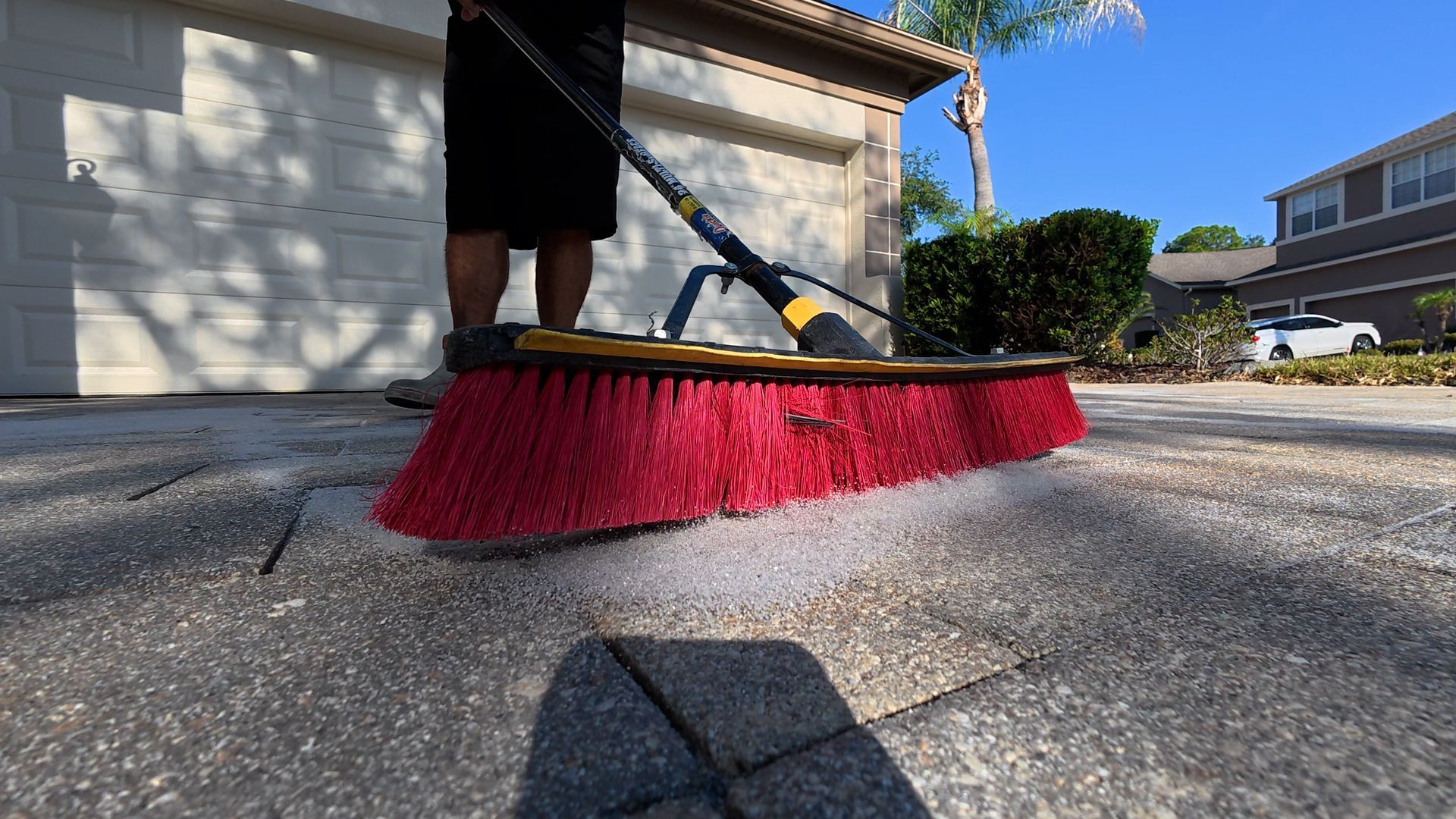
Concrete Pavers
The most common surface we seal in Tampa Bay — driveways, walkways, and patios. A breathable sealer protects against fading and locks in joint sand.
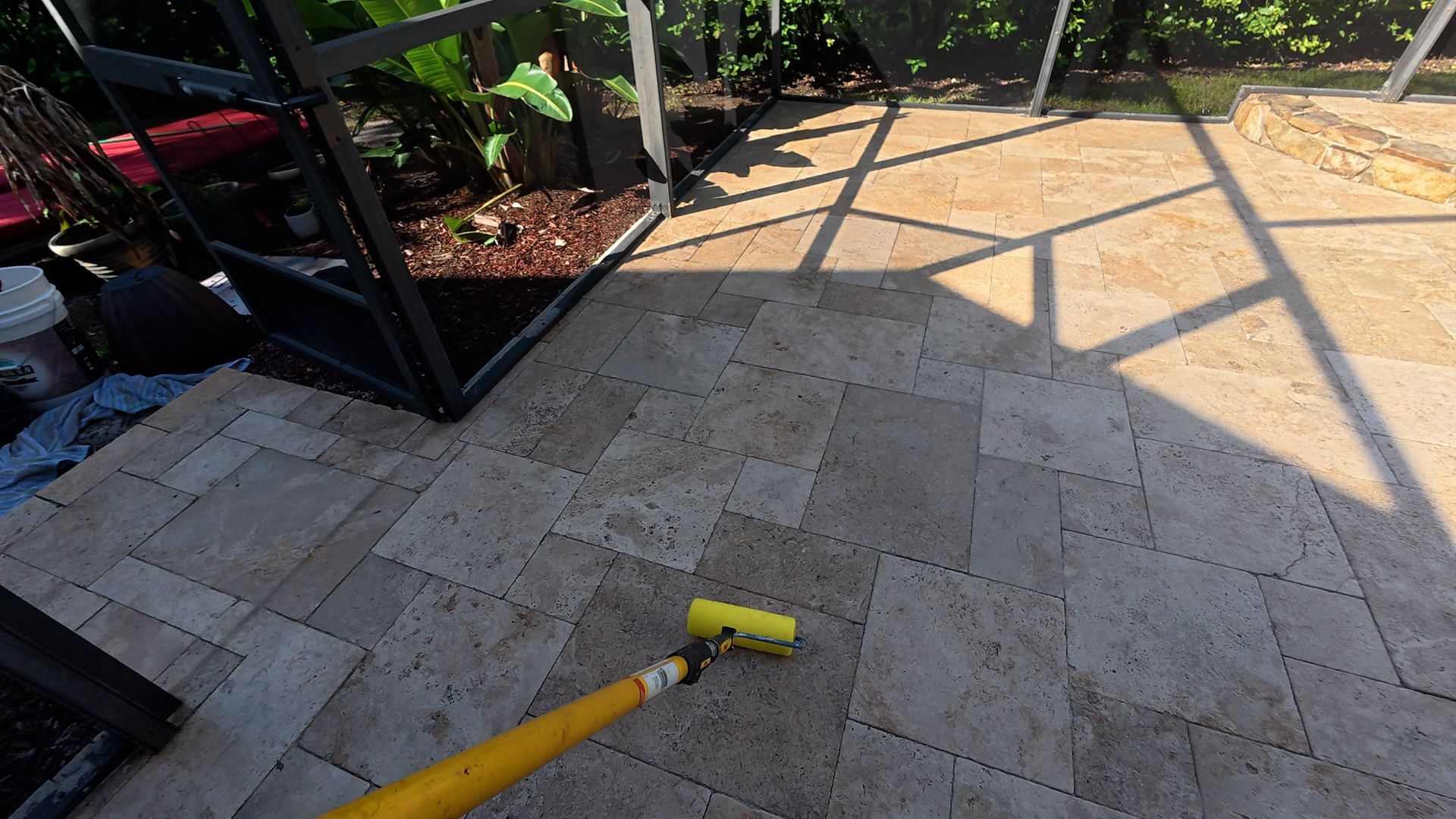
Travertine
A softer, more porous natural stone common on pool decks and lanais. Needs a sealer suited to that porosity — one that protects without trapping moisture underneath.
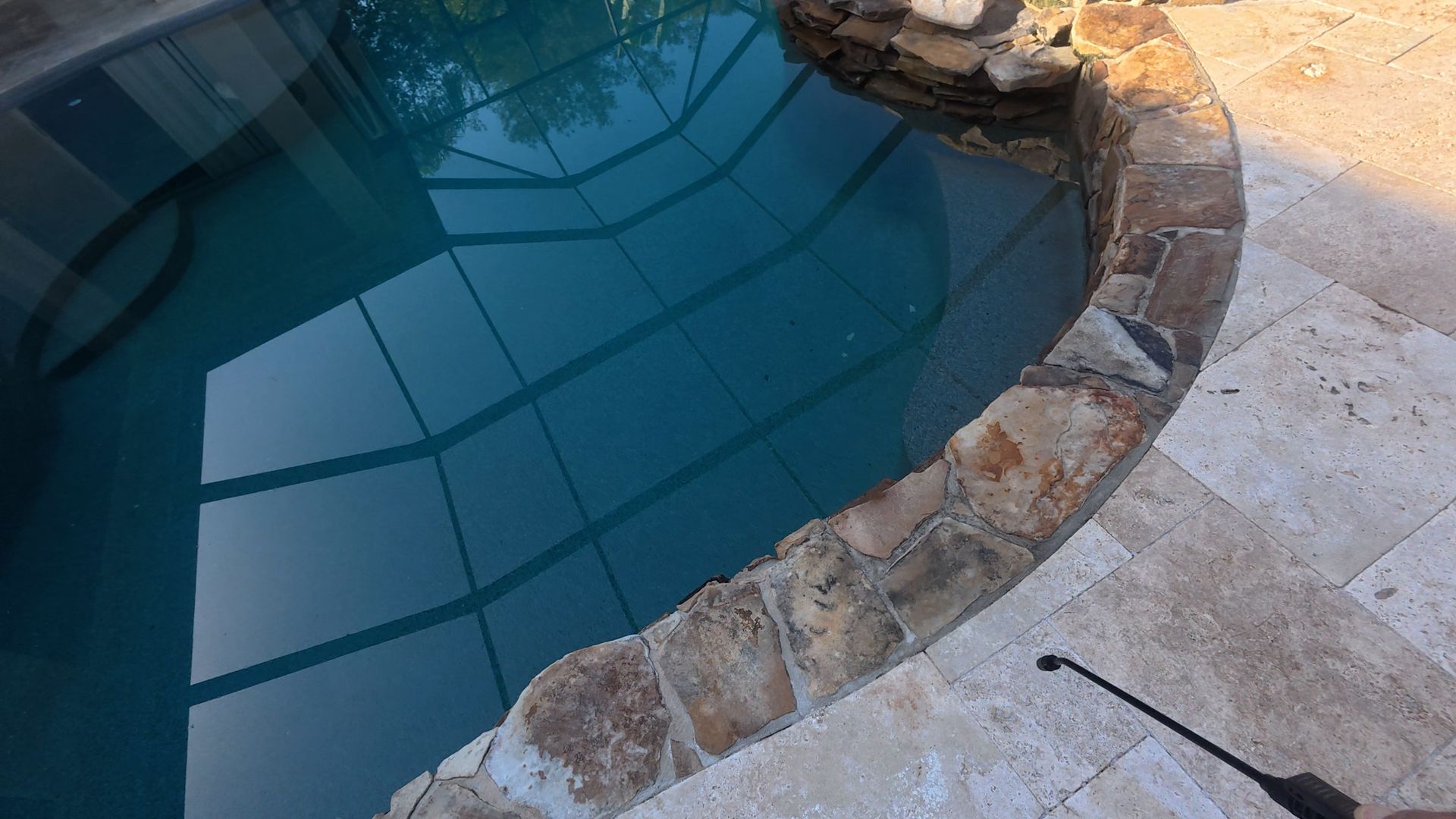
Natural Stone
A softer, more porous natural stone common on pool decks and lanais. Needs a sealer suited to that porosity — one that protects without trapping moisture underneath.
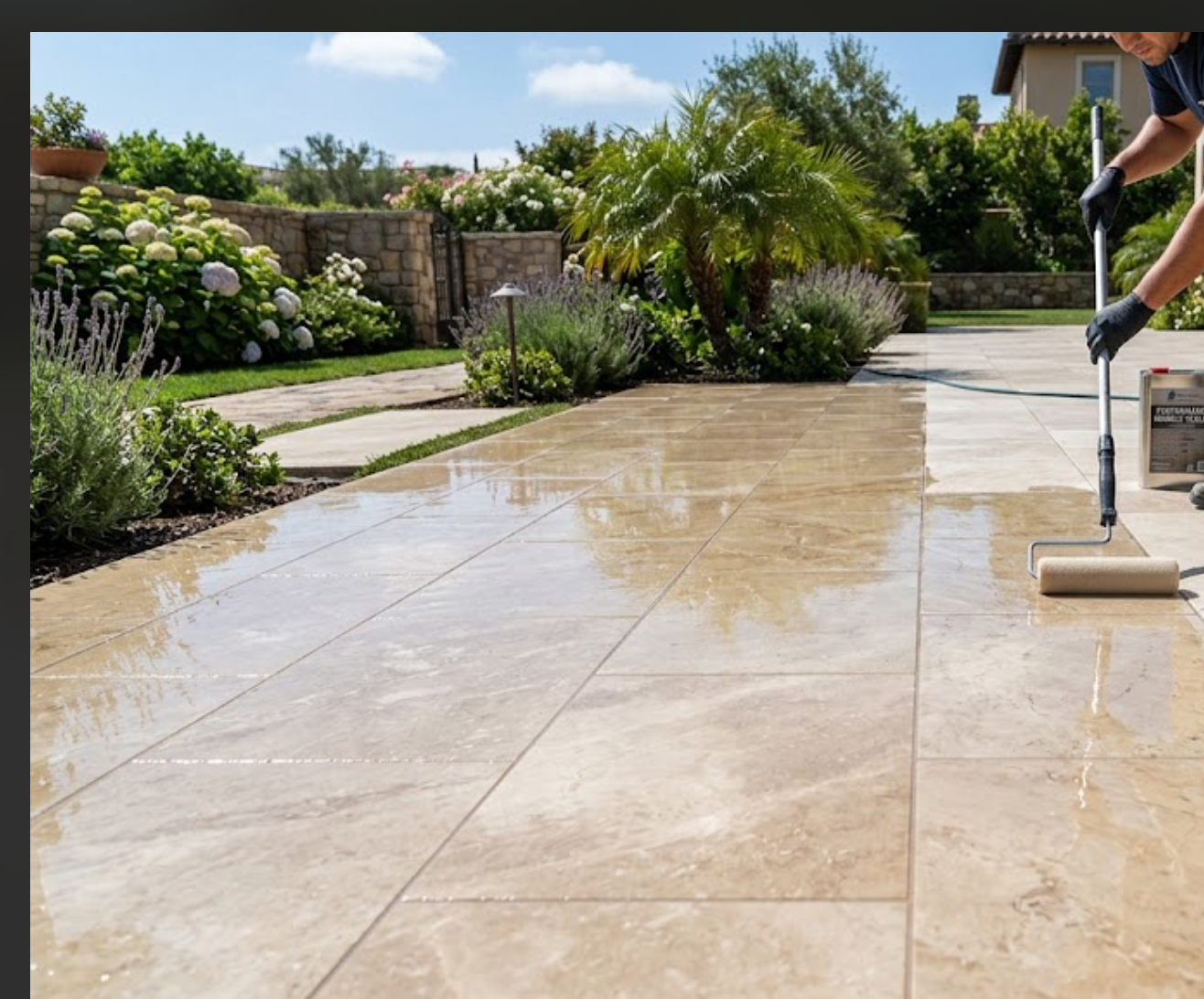
Marble
Less common outdoors in Florida, but shows up on some entries and lanais. Marble is sensitive to etching and needs a non-etching, stone-safe sealer.
We don’t cut corners here. Proper paver sealing is a multi-step process, and skipping steps leads to premature failure.
1. Deep Cleaning
We start with a thorough pressure washing (soft washing on softer surfaces like travertine) to remove:
- Dirt, grime, and buildup
- Algae, mold, and mildew
- Surface stains
If needed, we treat problem areas like oil stains or heavy organic growth to ensure a clean surface before sealing.
2. Joint Sand Stabilization
Once the surface is clean and dry, we:
- Refill joints with high-quality silica sand
- Ensure proper filling levels to prevent washout and weed growth
This step is critical. Without solid joints, pavers shift and fail over time.
3. Surface Preparation & Drying
We allow the pavers to dry before sealing. Moisture trapped beneath sealer is one of the biggest causes of failure—this is where rushed jobs go wrong.
4. Professional Sealer Application
We apply a premium sealer designed for Florida conditions. Options include:
- Natural look (matte finish)
- Wet look (enhanced color and shine)
- We recommend Ure-Seal Gloss sealer for most paver applications
The sealer is evenly applied to:
- Lock in joint sand
- Create a protective barrier
- Enhance the appearance of the pavers
What’s Included in Our Paver Sealing Process?
Why Paver Sealing Is Important
Unsealed pavers may look fine at first, but deterioration starts quickly in this climate.
Prevents Fading and UV Damage
Florida sun will bleach out pavers over time. Sealing helps preserve the original color and keeps your surface looking newer longer.
Stops Weed Growth and Insects
Sealing locks in the joint sand, making it much harder for:
- Weeds to grow
- Ants and insects to burrow
Reduces Staining
Driveways and pool decks are especially prone to:
- Oil stains
- Rust stains
- Organic discoloration
Sealer creates a barrier that makes spills easier to clean before they set in.
Prevents Erosion and Paver Movement
Heavy rain can wash out joint sand, leading to:
- Uneven surfaces
- Trip hazards
- Costly repairs
Sealing stabilizes the joints and helps keep everything in place.
Get a Quote for Paver Sealing
If your pavers are faded, stained, or starting to shift, now is the time to act. Waiting only increases the cost of restoration later.
Contact Radiant Clean today to schedule a quote and bring your pavers back to life—with protection that lasts.comfortably, with minimal maintenance hassle.
Contact us today to schedule your next pressure washing service and discover the difference a clean, well-maintained pool deck, patio, or lanai can make for your home. Trust us to keep your outdoor spaces welcoming and beautiful, year after year.
FAQs
How often should pavers be resealed in Florida?
Most Tampa Bay pavers need resealing every 2 to 3 years, depending on sun exposure, foot traffic, and pool or sprinkler contact.
What's the difference between sealing concrete pavers and sealing travertine or marble?
Concrete pavers are harder and more forgiving, generally need to have sand added for joint stability, and use a different type of sealant. Travertine and marble are natural stone — softer, more porous, and more sensitive to the wrong sealer or cleaning chemical. We adjust both the prep and the sealer to the material.
Do you use polymeric or silica sand in the joints?
Silica sand. Polymeric sand traps moisture against the paver, which in Florida's humidity leads to hazing, mildew, and cracking. See the full explanation →
Will sealing make my pool deck or lanai slippery?
With concrete pavers, no. This is however a common problem with some sealants used with travertine and marble. We recommend using water-soluble sealants that absorb into the natural stone since these do not leave a slick coating on the surface of the paver. If you do prefer a sealant coats the surface, then anti-slip material can be added.
Can sealing restore the color of faded pavers?
Depending on the condition of the pavers, and the type of paver, yes it can. For concrete and brick pavers, sealing brings back some of a paver's original color and sheen and protects it from further UV fading going forward.
Serving the Greater Tampa Area
- Apollo Beach
- Barlo
- Bloomingdale
- Bradley Junction
- Fishhawk Ranch
- Gibsonton
- Lakeland
- Lutz
- Mulberry
- Plant City
- Riverview
- Seffner
- Sun City Center
- Tampa
- Thonotosassa
- Temple Terrace
- Valrico
- Wesley Chapel
- Wimauma
- Winter Haven
- Zephyrhills
- + More!