Why Tampa Bay's Water Causes This
Hard water spotting comes from dissolved calcium and magnesium in the water itself, and Tampa Bay's water carries a lot of it. The City of Tampa's own water quality reporting puts local hardness in the
140 to 300 parts per million range (roughly 8 to 17 grains per gallon), which classifies as hard to very hard by USGS standards — and hardness runs even higher in parts of the surrounding area, including Wesley Chapel and Lutz.
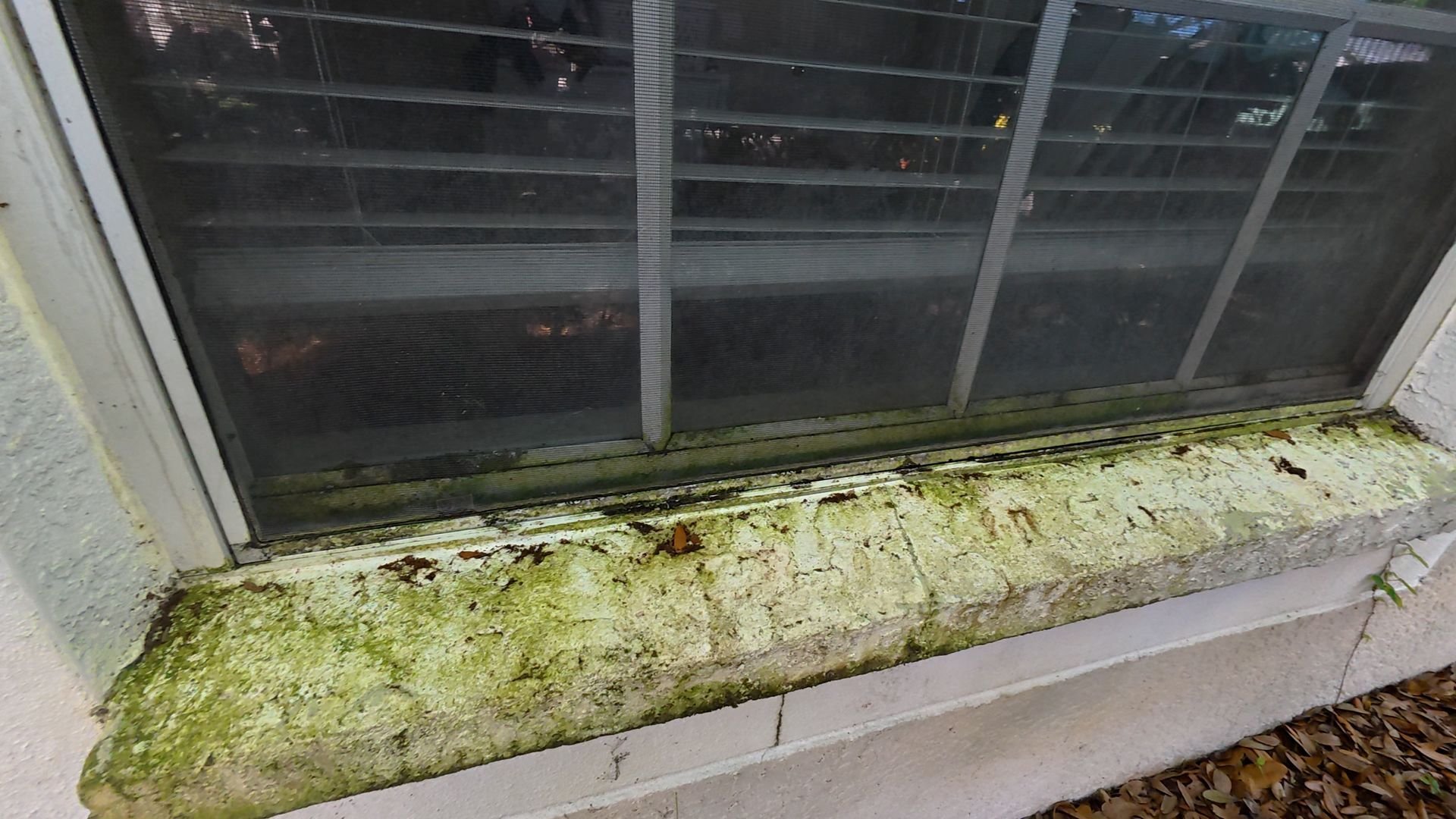
Windows take the brunt of it because of one thing almost every Tampa Bay property has: irrigation. Sprinkler heads that clip a window, patio door, or lanai enclosure spray mineral-laden water directly onto the glass, run after run, week after week. Every time that water dries, it leaves behind a microscopically thin layer of minerals. Rain does the same thing on a smaller scale. Over enough cycles, those layers stack up into the visible spotting that so many homeowners assume is just dirt.
How Hard Water Spotting Becomes Permanent Etching
This is the part that catches people off guard: hard water spotting doesn't stay a surface-level problem forever. Each time mineral-laden water dries on glass, it leaves deposits behind, and those deposits don't fully rinse away with more water — more water is exactly what created them. Left in place long enough, the minerals bond to the glass itself, creating a rough, cloudy texture that's no longer sitting on top of the surface. It's part of it.
At that stage, the damage is permanent. No cleaner, no amount of scrubbing, and no professional treatment can fully reverse true etching — the glass has to be replaced to look new again. That's the entire reason catching and treating spotting early matters so much: there's a window (no pun intended) where the problem is still just residue, and once it closes, it's a glass replacement conversation instead of a cleaning one.
Signs Your Windows Have Hard Water Damage
A few signs are worth checking for before assuming a dirty window just needs a wipe-down:
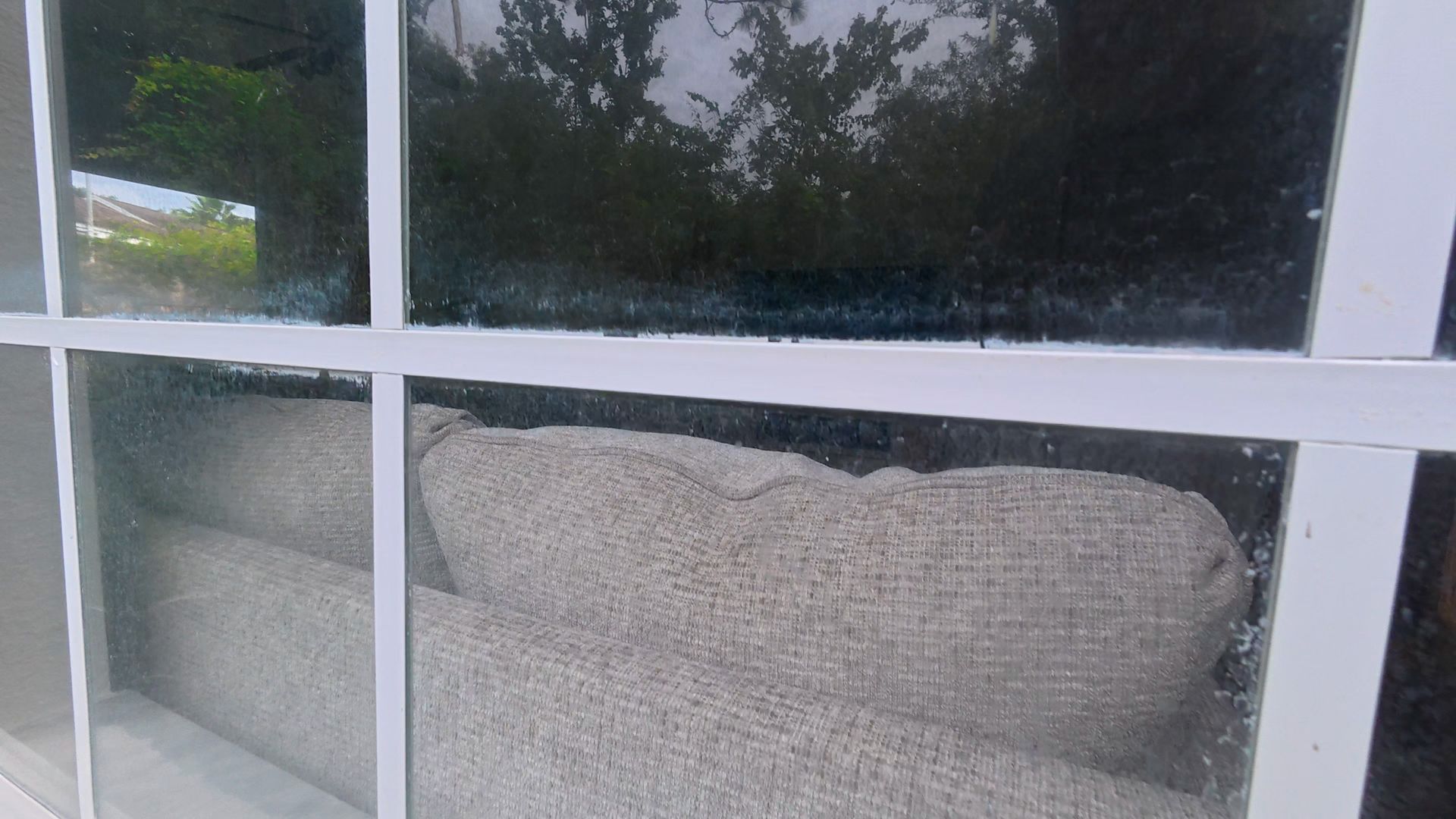
Spotting in a pattern. Spots that line up in rows or clusters, especially near the bottom of a window or lanai screen, almost always trace back to a sprinkler head rather than rain or general grime.
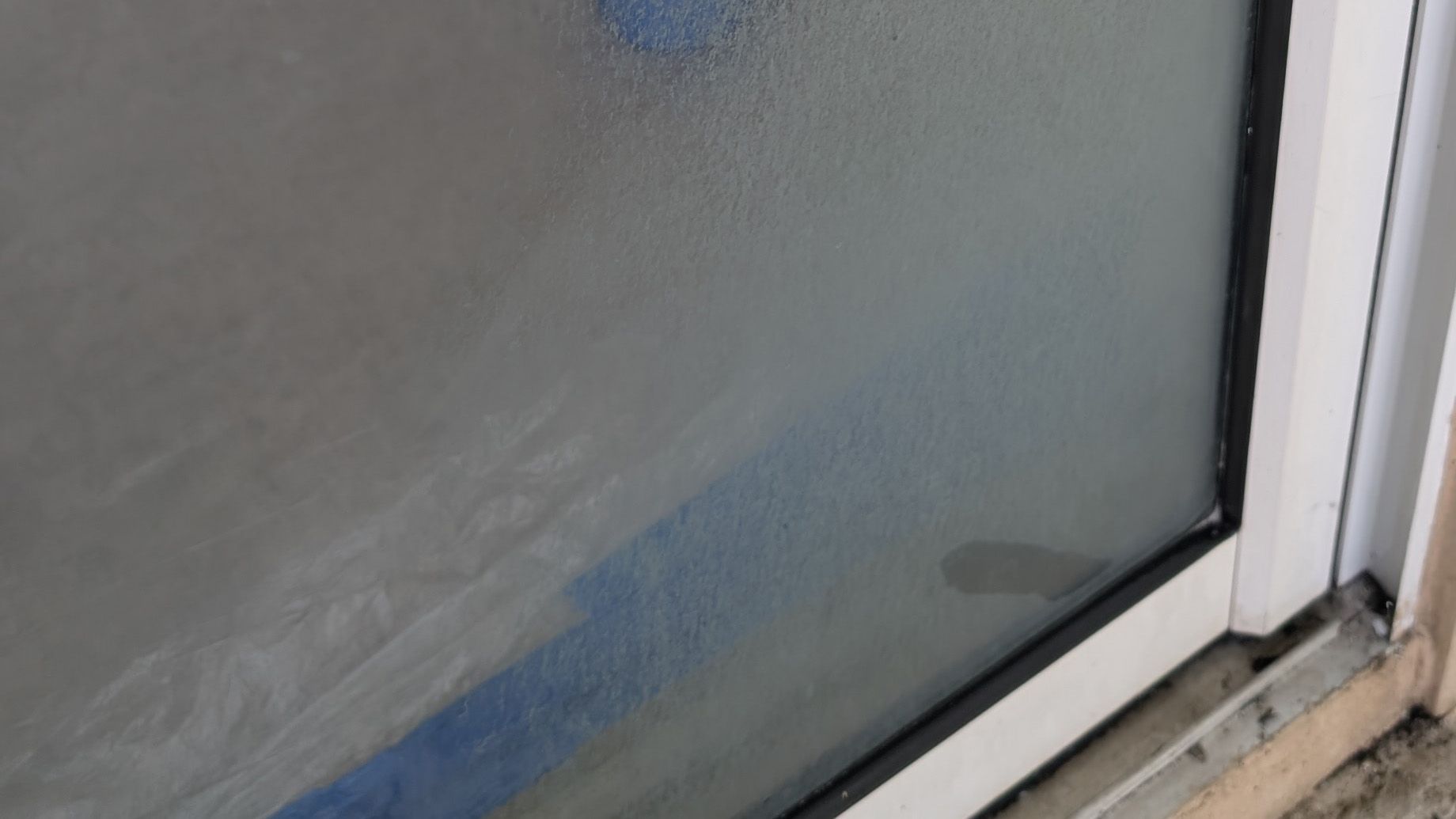
A cloudy or hazy film that won't wipe off. If glass cleaner and a paper towel don't restore clarity, that's usually a sign mineral deposits have moved past simple surface dirt.
A rough texture you can feel. Run a hand over the glass. If it doesn't feel perfectly smooth, that's often the clearest sign etching has already started.
Spots that return within days of cleaning. This is one of the most telling signs of all, and it points directly at how the window was cleaned — more on that below.
Why DIY Cleaning Often Falls Short
DIY glass cleaning isn't useless — a vinegar-and-water solution can genuinely lift light, fresh spotting. But there are a few reasons it tends to lose the battle with Tampa Bay's water over time:
Tap water rinsing reintroduces the problem. This is the part that trips up almost every well-intentioned DIY cleaning. Rinsing a window with a garden hose or tap water — the same hard water causing the spotting in the first place — means the “clean” window is drying with more minerals left behind. The window looks clear for a moment, then spots right back up as it dries.
Store-bought cleaners and abrasive pads can make things worse. Scrubbing at existing mineral buildup with an abrasive pad or scraper risks scratching glass that may already be weakened by early-stage etching, sometimes leaving faint scratches that are just as noticeable as the spotting was.
Height and access limit what's realistic. Second-story windows, lanai screens, and hard-to-reach glass often just don't get cleaned as often as they should, which gives mineral deposits more uninterrupted time to build up and bond.
It treats the symptom, not the cause. Even a perfect DIY cleaning only resets the clock — it doesn't change what happens the next time a sprinkler hits the glass or rain dries on it.
Why It's Worth Using a Professional
This is really where the difference shows up, and it's not just about a more thorough scrub.
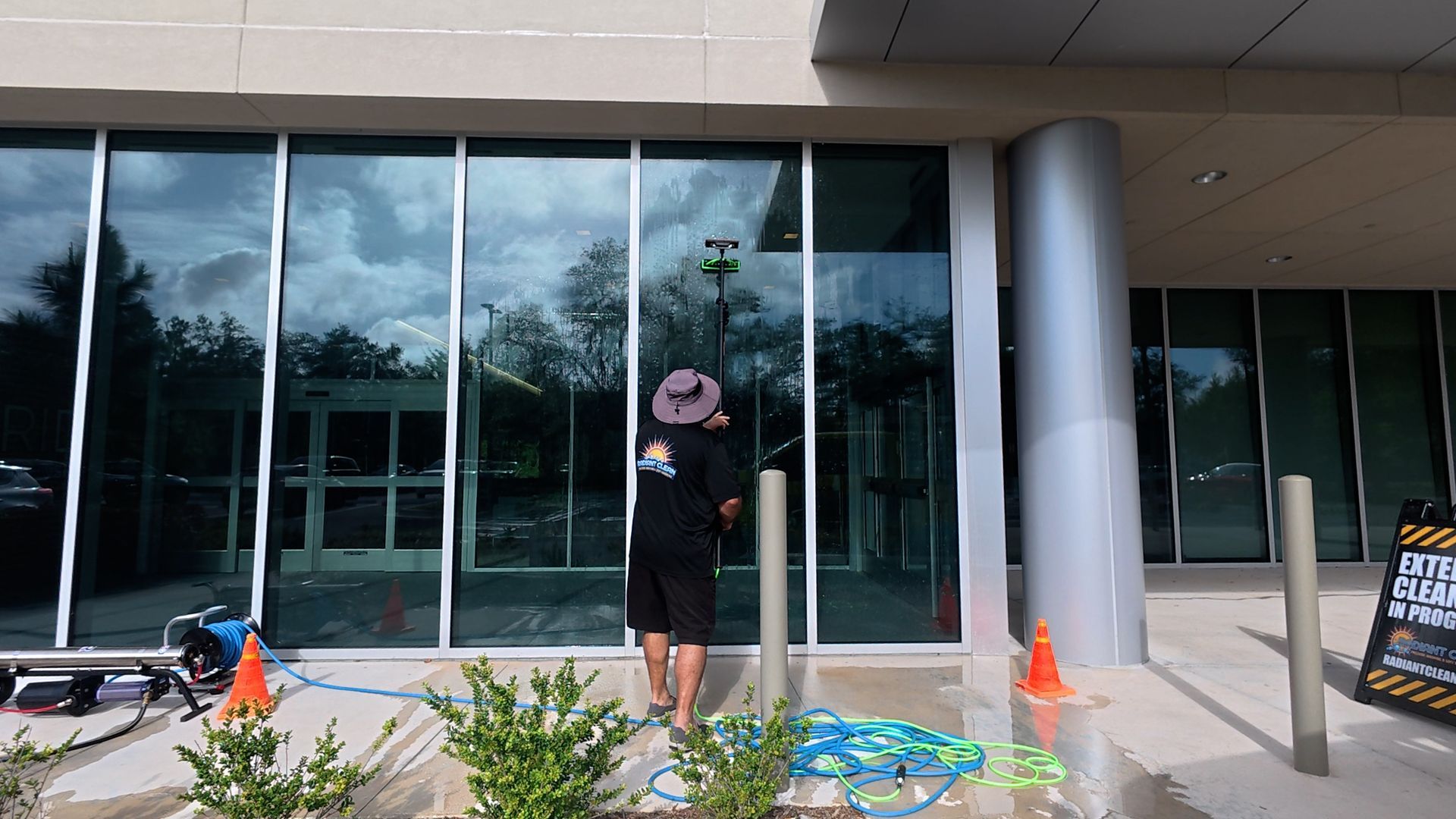
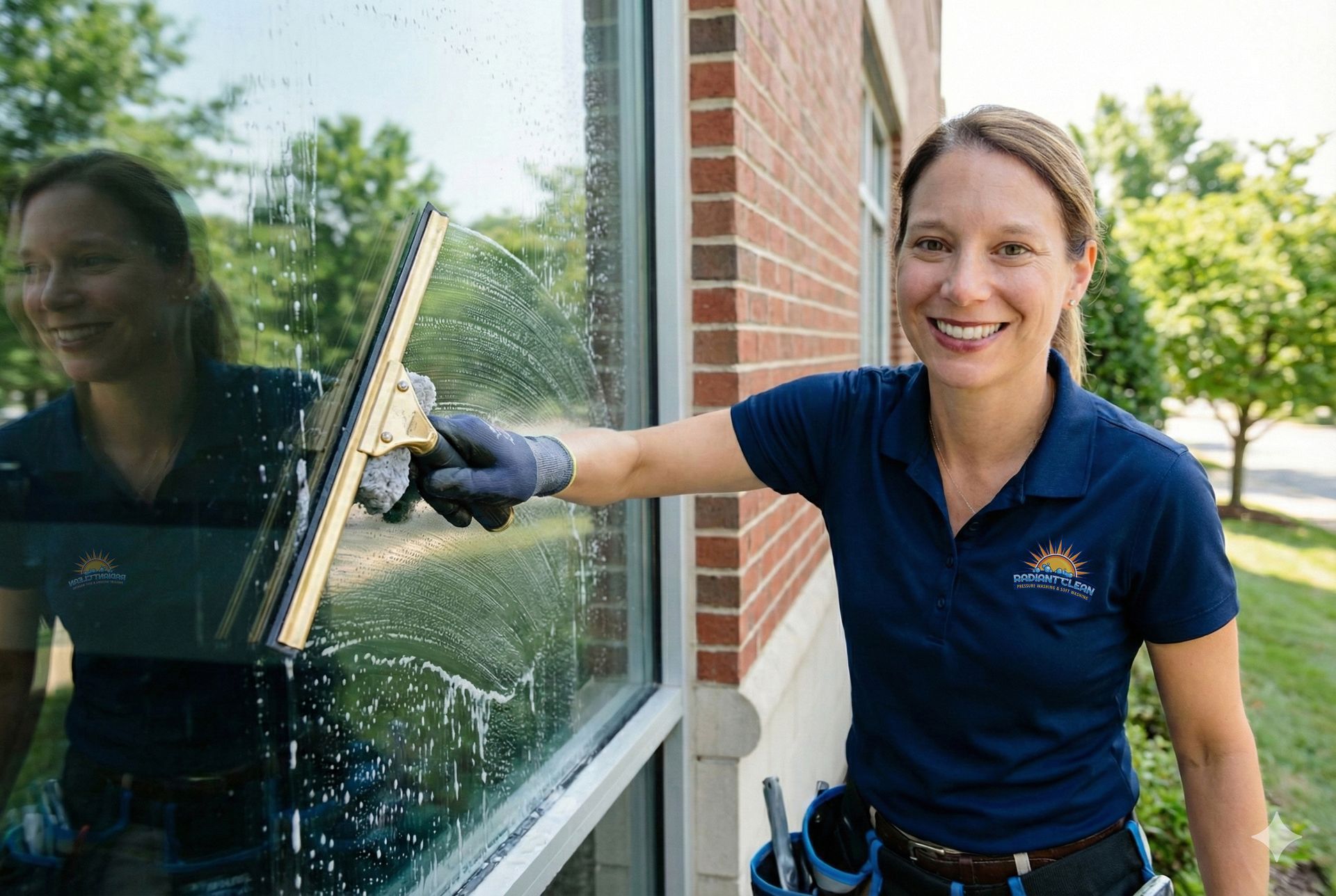
Professional window cleaning uses purified, mineral-free water for the final rinse.
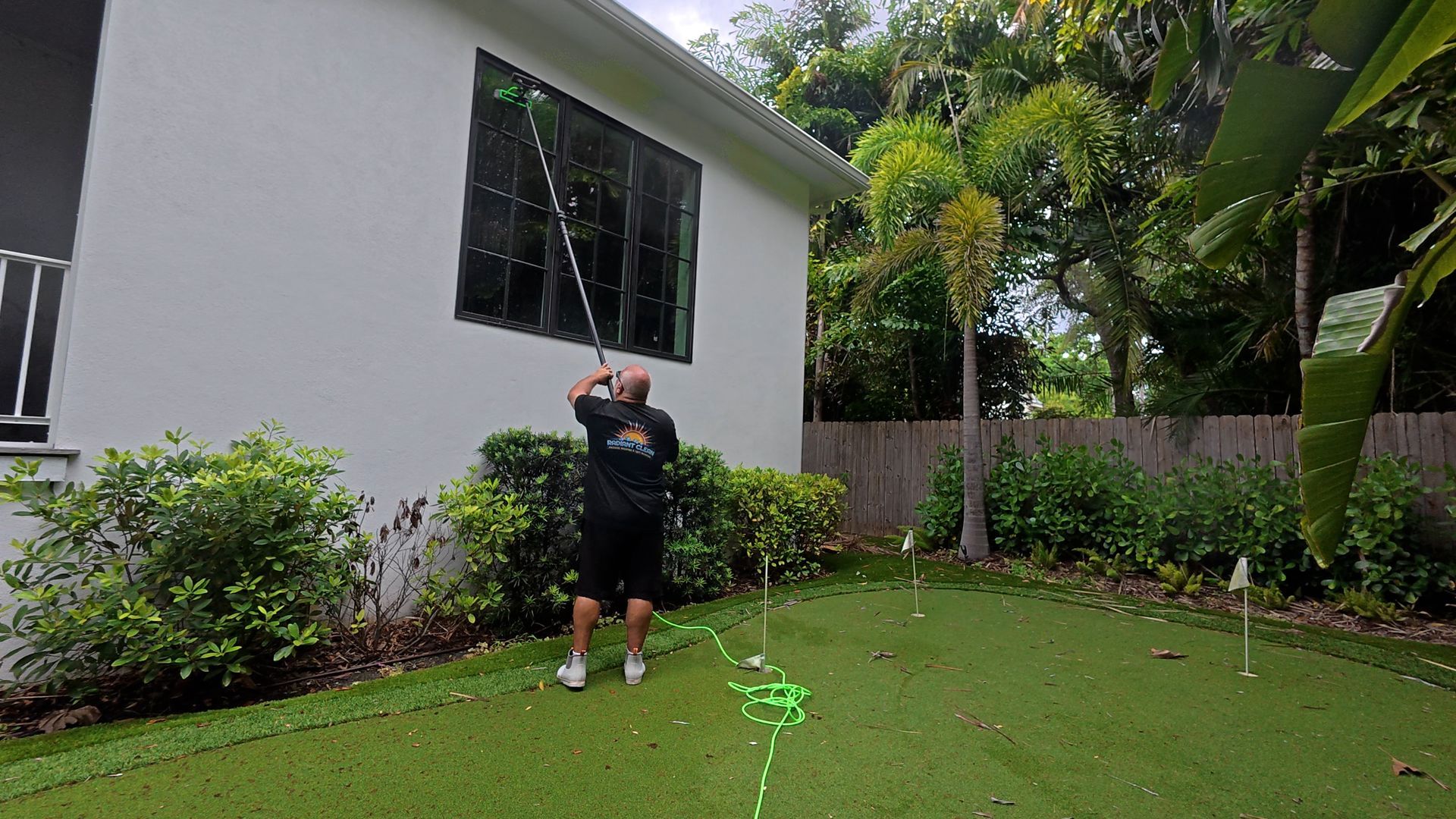
Water-fed pole systems draw from a purified or deionized water source, which means the water used to rinse the glass has virtually none of the calcium and magnesium that causes spotting in the first place. Since spots only form because minerals are left behind as water dries, rinsing with water that has nothing left to deposit removes the actual mechanism behind the problem — not just the current spots, but the reason they keep coming back. That's the single biggest reason a professional cleaning holds up longer than a DIY one, spot for spot.
The technique protects the glass instead of risking it. Professionals know how much pressure and what tools a given window, tint, or seal can handle, and how to work stubborn mineral deposits loose without abrasive scrubbing that risks scratching.
Trained eyes catch the problem while it's still fixable. A professional cleaner sees hard water spotting at every stage, so they can flag early buildup before it crosses over into true etching — the difference between “this comes off with today's cleaning” and “this glass needs to be replaced.”
Safety and access aren't an afterthought. Extension poles, proper ladders, and the right equipment mean second-story windows, lanais, and hard-to-reach glass actually get cleaned on schedule, instead of getting skipped because they're inconvenient to reach.
Recurring service is genuine prevention, not just maintenance. Because etching happens gradually, over months of repeated drying cycles, the real fix isn't a single deep clean — it's not letting mineral deposits sit long enough to bond in the first place.
A recurring cleaning plan (quarterly for windows with heavy sprinkler exposure, biannual for lower-exposure properties) keeps buildup from ever reaching the point where it becomes permanent.
Put simply: DIY cleaning can make windows look better today. Professional cleaning with the right water and the right technique is what actually stops the underlying problem from progressing — and given that etched glass can only be fixed by replacing it, that difference is worth more than it might seem on the surface.
Seeing hard water spotting on your windows?
Get a free estimate
and we'll tell you honestly whether you're looking at removable buildup or early etching, or
set up a recurring window cleaning plan to keep it from getting there in the first place.
FAQ
Can hard water spots on windows be removed?
Light, fresh mineral spotting can usually be removed with the right cleaning approach. Once the minerals have bonded into the glass surface — creating a rough texture or permanent cloudiness — that's true etching, and it can't be fully reversed by cleaning. The earlier it's treated, the more likely it is to be fully removable.
Why does my hard water spotting come back so fast after I clean it myself?
Most DIY window cleaning finishes with a rinse from a garden hose or tap water, which is the same hard water causing the spots in the first place. The window looks clean for a moment, but as that water dries, it leaves fresh mineral deposits behind — so the spotting effectively restarts as soon as the glass dries.
How do professionals remove hard water spots without scratching the glass?
Professional window cleaning uses chemicals, techniques, and tools matched to the glass and the severity of buildup, avoiding the abrasive scrubbing that risks scratching already-vulnerable glass.