How Often Should Windows Be Cleaned in Florida?

Roy Bielewicz • August 21, 2026

If you live in the Tampa Bay area, you've probably noticed your windows get dirty faster here than they did anywhere else you've lived. That's not your imagination — Florida's climate genuinely is harder on glass than most of the country, and it changes the answer to a question every homeowner eventually asks: how often should windows be cleaned in Florida?


The short answer is that most Florida homes need window cleaning at least twice a year, with many properties needing more depending on location and exposure. But the real answer depends on a handful of local factors — humidity, salt air, sprinklers, pollen season, and storm debris — that don't apply the same way in Ohio or Colorado. This guide breaks down why Florida is different, what a reasonable cleaning schedule looks like for homeowners and commercial properties, and how to spot the warning signs that you've waited too long.


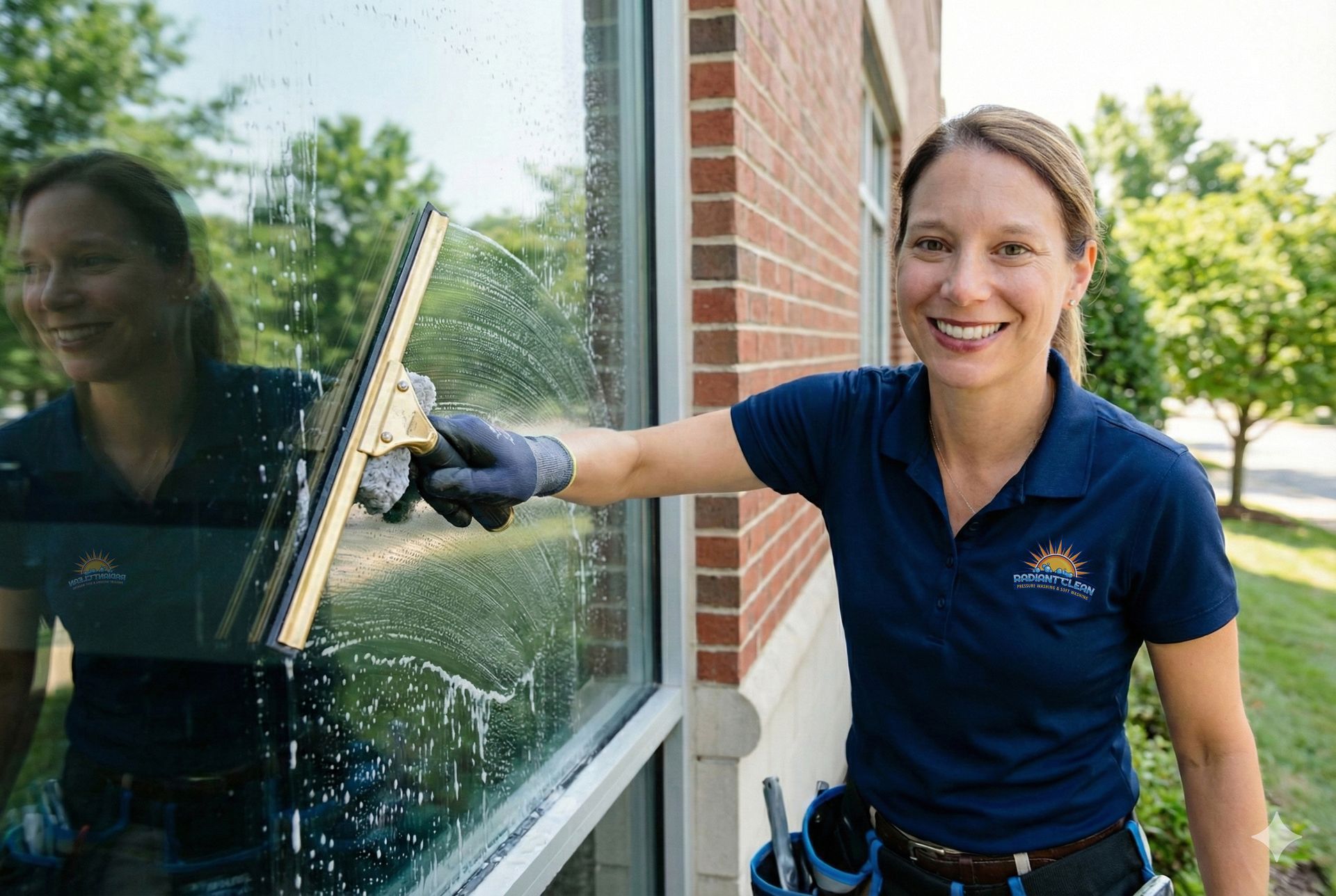
Worker cleaning a window with a squeegee outside a brick building, smiling and wearing gloves

Why Florida's Climate Is Harder on Windows Than Most States

Florida glass takes a beating year-round, and it's worth understanding why before you set a cleaning schedule.


Humidity.
Tampa Bay's average humidity sits well above the national norm most months of the year. That constant moisture in the air doesn't just fog up your glasses — it gives dust, pollen, and airborne grime something to stick to, and it slows evaporation so residue has more time to bond to the glass surface.


Salt air.
Anyone near the coast — Apollo Beach, Sun City Center, and other waterfront communities in our service area — deals with a fine salt film that settles on windows even when a beach day feels miles away. Salt is corrosive, and left long enough it can etch into glass and pit metal window frames and screens.


Sprinkler hard water.
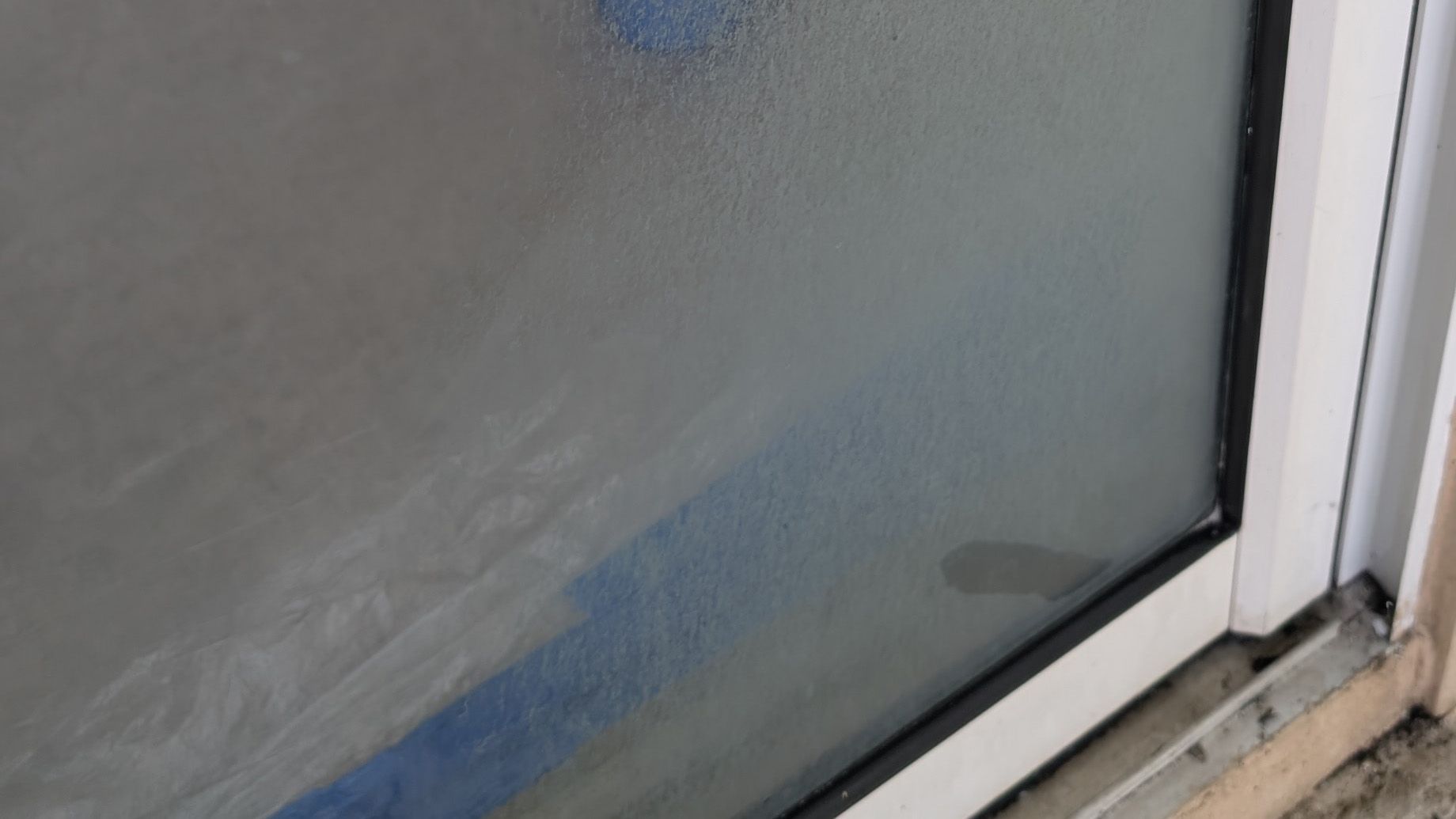
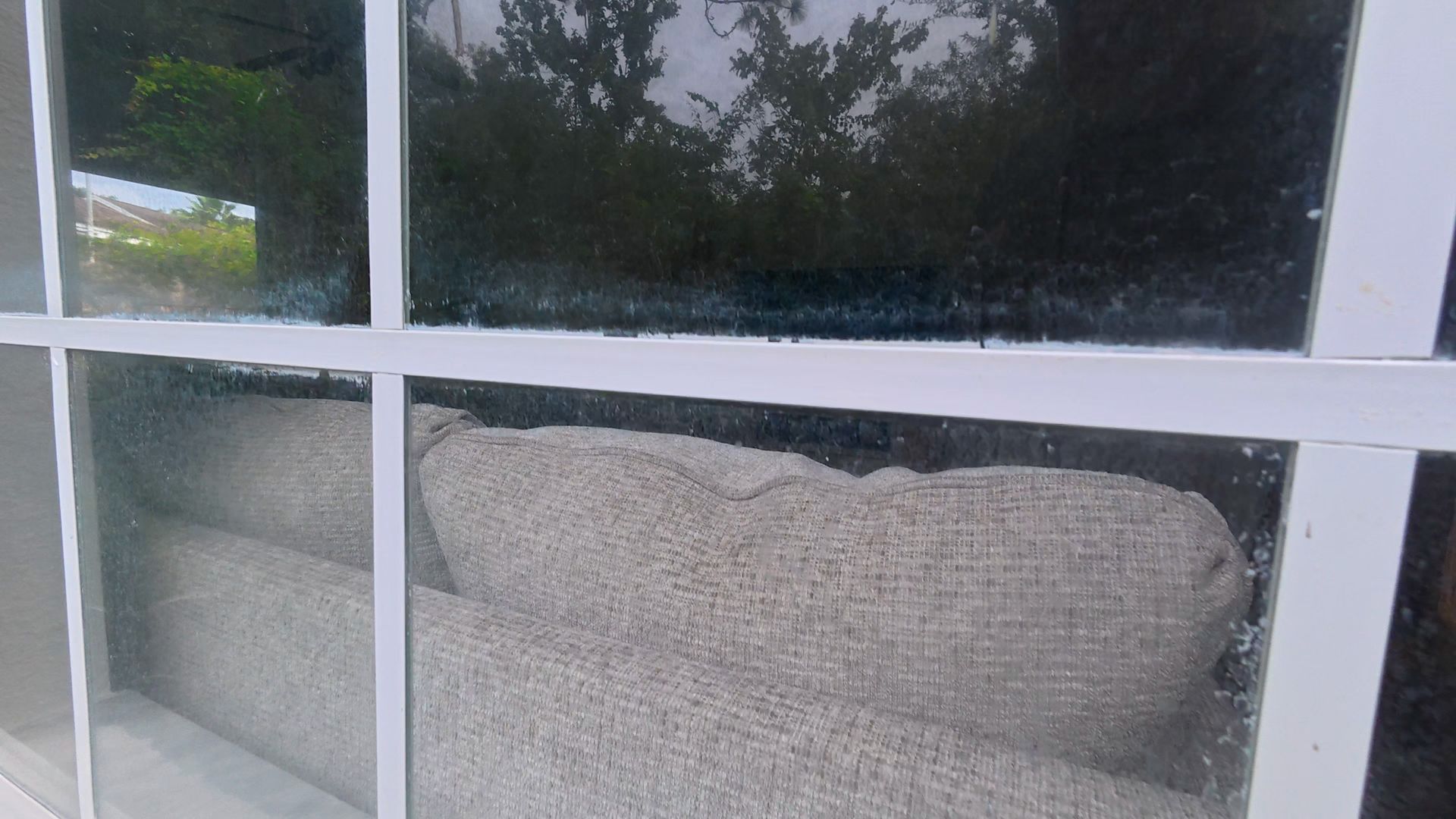
This is one of the most underestimated culprits in Florida. Irrigation systems that spray directly onto windows leave behind mineral deposits from hard water every single time they run. Over weeks and months, those deposits build into visible spotting and, eventually, permanent etching that no amount of cleaning can fully remove. 


Pollen season.
Florida's pollen season runs long and hits hard, coating exterior glass in a yellow-green film that's obvious on dark-framed windows and glass doors. Oak and pine pollen in particular can turn a window hazy within days of a good cleaning.


Storm season debris.
Hurricane season brings more than wind and rain. Windborne dirt, plant debris, and the aftermath of heavy rain splashing dirt up from the ground all leave grime on windows that a quick rinse won't fully clear.


Put together, these factors mean Florida windows accumulate buildup faster than windows in drier, cooler climates — which is exactly why a "clean when it looks dirty" approach tends to leave homeowners playing catch-up.


Hard water spots on windows

General Guidelines for Homeowners

For most Tampa Bay homes, twice a year is the baseline — generally once in spring and once in fall, timed around pollen season and before the heaviest stretch of summer storms.


That said, twice a year is a floor, not a ceiling. You should plan on more frequent cleaning if any of the following apply to your property:


  • You live directly on the coast or within a mile or two of the water, where salt air accumulates faster.
  • Your sprinkler system regularly hits your windows (a very common issue in Florida landscaping).
  • Your home is shaded by oak, pine, or other heavy-pollen trees.
  • You're preparing for a specific event — a listing, a sale, a party, or hosting family — and want the glass looking its best.


Homes with one or more of these factors often do better on a
quarterly cleaning schedule rather than twice a year. If you're not sure which category your home falls into, a quick walk around your property looking for the signs below will usually tell you.


Signs Your Windows Need Cleaning Sooner

Between scheduled cleanings, keep an eye out for these warning signs that your windows can't wait for the next visit:


  • Visible spotting or streaking
    , especially in a pattern that lines up with your sprinkler heads. This is one of the clearest signs of hard water buildup starting to take hold.
  • A cloudy or hazy film that doesn't wipe away easily with a glass cleaner — this can indicate mineral deposits have moved past surface dirt and started bonding to the glass.
  • Visible etching or a rough texture when you run a hand over the glass. This is the point where hard water damage has become permanent, and no cleaning — professional or DIY — can fully reverse it. 
  • Pollen residue that leaves a colored tint on the glass, particularly noticeable on darker frames.
  • Salt film that leaves windows looking dull even right after a rain, which usually means it's been building for a while.


If you're seeing any of these signs before your next scheduled cleaning, it's worth moving up the timeline. The cost of an extra cleaning is always lower than the cost of replacing glass that's been permanently etched.


Recommendations for Commercial & Multifamily Properties

Businesses and multifamily communities have a different calculus than single-family homes, mostly because of foot traffic, visibility, and the direct link between window appearance and curb appeal.


Storefronts, restaurants, and office buildings typically need window cleaning on a
monthly to quarterly schedule, depending on location and traffic. A ground-floor storefront on a busy street collects fingerprints, exhaust residue, and street-level dust far faster than a home ever would — and first impressions matter more when every window is effectively a sign for your business.


Multifamily and apartment communities face similar pressure, plus the added factor of resident satisfaction and leasing appeal. Clean windows across common areas, clubhouses, and building exteriors are a small detail that prospective residents notice on a tour, and they're part of the reason property management companies increasingly build window cleaning into a recurring maintenance plan rather than a one-off service. 


How Recurring Plans Solve This Automatically

Here's the honest truth: almost nobody remembers to schedule window cleaning every three to six months on their own. Life gets busy, and "I'll call them next month" quietly turns into a year.


That's exactly the problem a recurring plan solves. Instead of trying to track pollen season, sprinkler damage, and storm debris on your own calendar, a recurring cleaning plan builds the right frequency into your schedule automatically:


  • Biannual plans fit homes without heavy coastal or sprinkler exposure — the twice-a-year baseline covered above.
  • Quarterly plans fit coastal homes, properties with sprinklers hitting the glass, and anyone who wants to stay ahead of hard water buildup before it becomes etching.
  • Custom/commercial plans fit businesses and multifamily properties that need monthly or quarterly service tied to foot traffic and curb appeal.


Beyond convenience, recurring plans are also the most cost-effective way to protect your investment. Catching hard water spotting early — before it has months to bond to the glass — is far cheaper than dealing with etched windows down the line, and most recurring customers pay less per visit than they would booking one-off cleanings each time.


FAQ

Does living near the water mean I need window cleaning more often?

Yes. Coastal and near-coastal homes accumulate a fine salt film on windows even without direct beach exposure, and salt is corrosive over time. Homes within a mile or two of the water — including many properties in Apollo Beach and Sun City Center — typically do better on a quarterly cleaning schedule instead of the twice-a-year baseline.


Can waiting too long between cleanings damage the glass?

It can, particularly when hard water from sprinklers or humidity is involved. Mineral deposits that sit on glass for weeks or months can etch into the surface permanently, creating a rough or cloudy texture that cleaning alone can no longer fix. Staying ahead of buildup with regular cleaning is the best way to avoid this kind of permanent damage.


What's the difference between quarterly and biannual plans?

Biannual plans clean your windows twice a year — typically spring and fall — and suit homes with lower exposure to salt air, sprinklers, or heavy pollen. Quarterly plans clean four times a year and are the better fit for coastal properties, homes with sprinklers that hit the windows directly, and commercial or multifamily properties where appearance and foot traffic demand more frequent attention.
Person standing outside glass building with cleaning supplies and buckets near the entrance
By Roy Bielewicz June 22, 2026
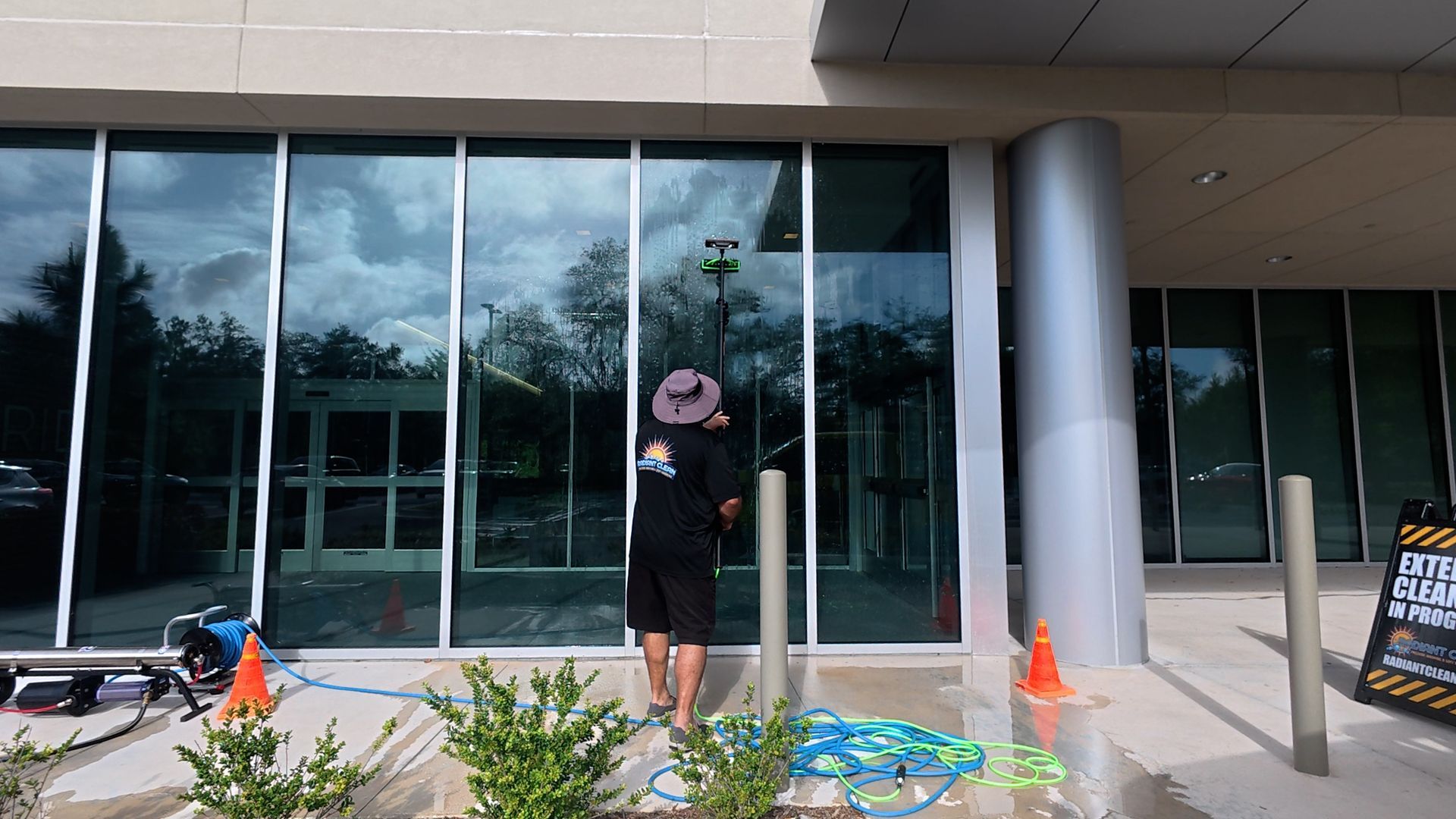
Your building's exterior is doing sales work 24 hours a day. Before a customer walks through your door, before a tenant signs a lease, before a patient decides whether your clinic feels trustworthy — your windows have already made an impression. At Radiant Clean, we provide professional commercial window cleaning for Tampa businesses, retail centers, office buildings, and property management companies that understand clean exteriors aren't cosmetic — they're part of the business.
By Roy Bielewicz June 19, 2026
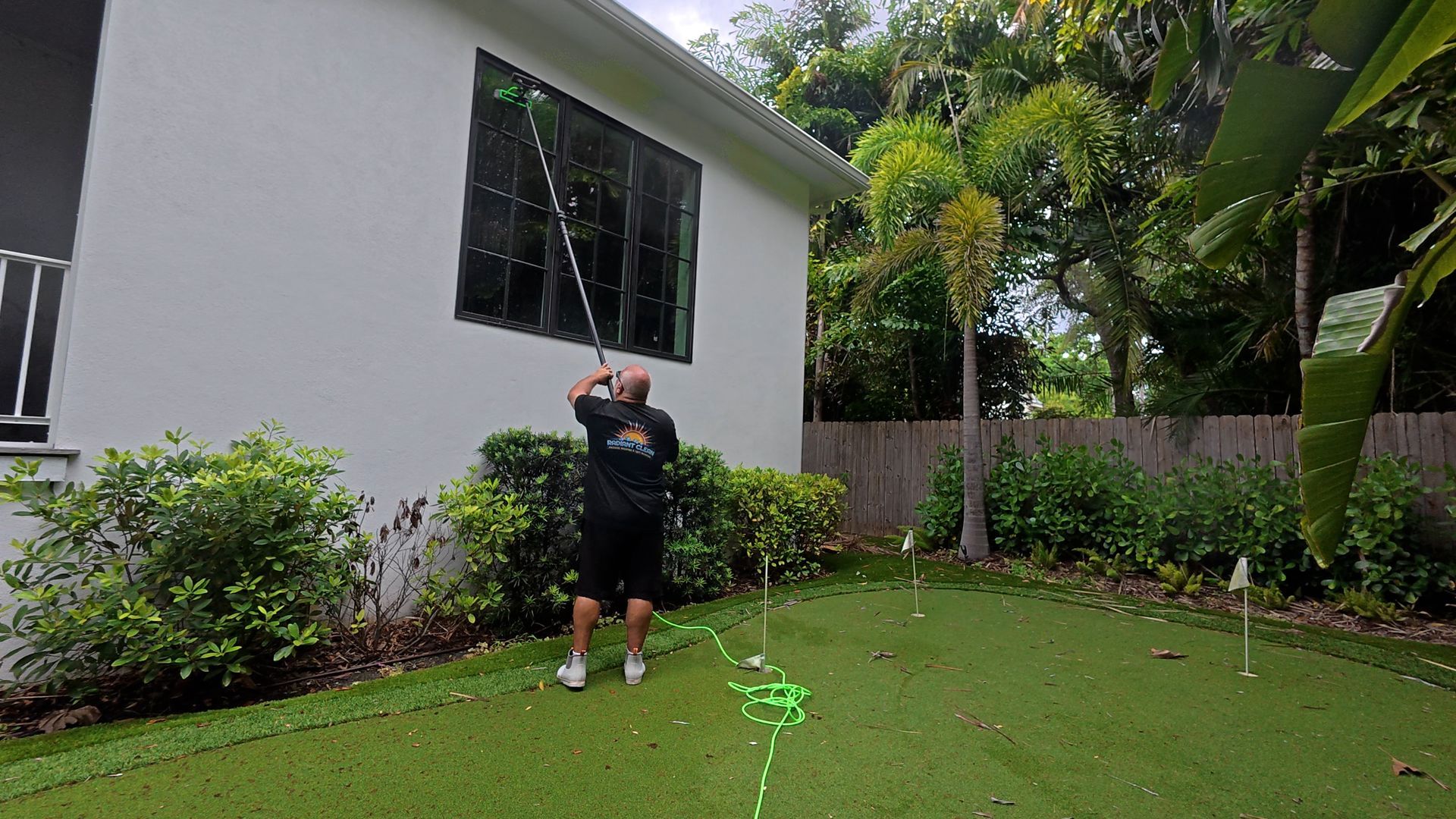
Your windows take a beating in Tampa. Between the sticky humidity, pollen seasons that coat everything in yellow dust, hard water sprinkler overspray, and the occasional tropical storm leaving behind a film of grime — clean windows feel like a losing battle for most homeowners. At Radiant Clean, we make it easy to keep your glass looking flawless year-round with professional residential window cleaning built for the specific conditions Tampa homes face.
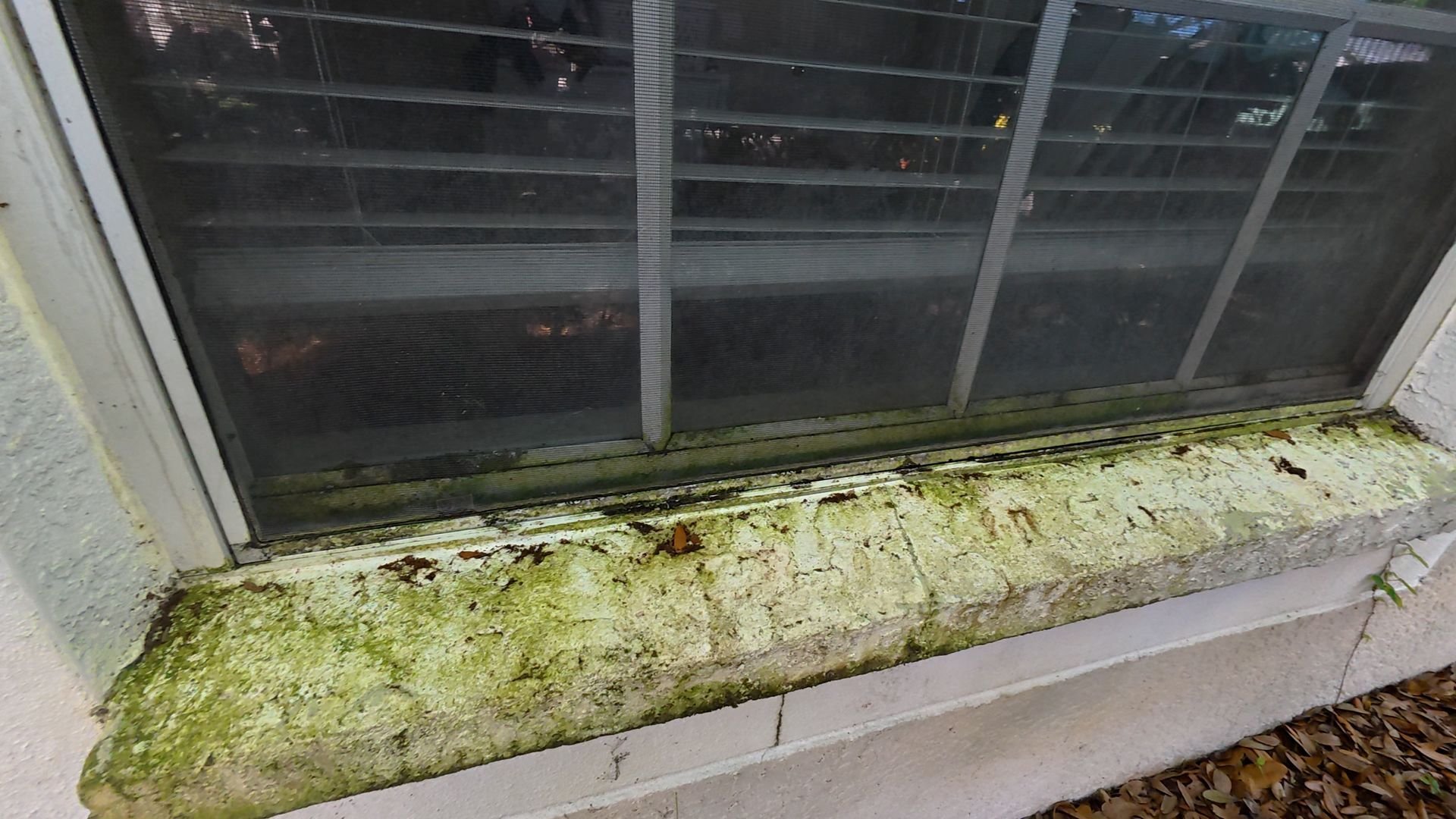
Alae build up on a window sill
By Roy Bielewicz April 29, 2026
Keeping your home's exterior is about more than just looks, it will save you money and hassle in the long run.
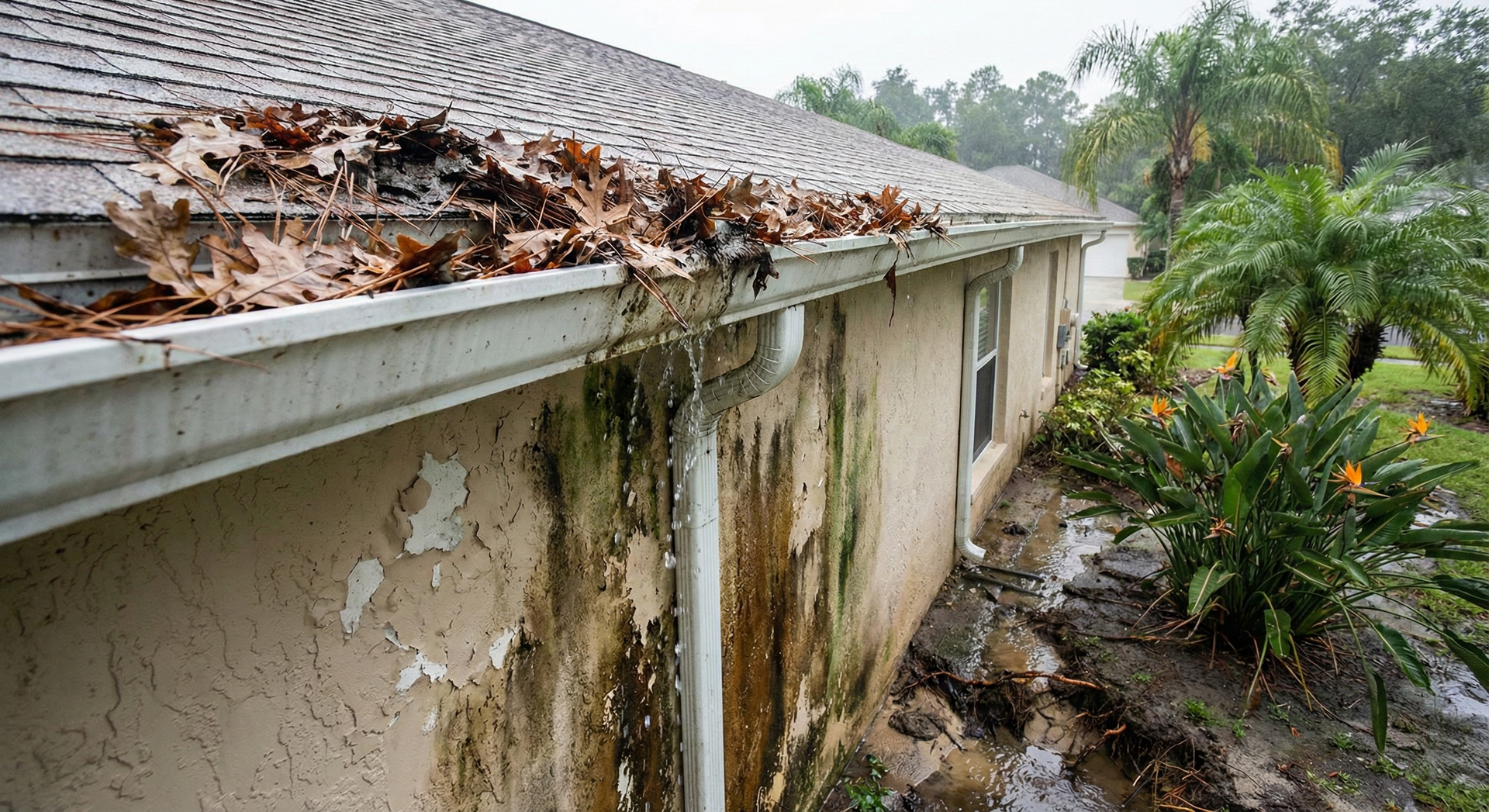
Overfilled gutters with leaves, causing water damage and staining on a beige house exterior.
By Roy Bielewicz December 20, 2025
Gutters are one of the most overlooked - and most important - protective systems on any property.
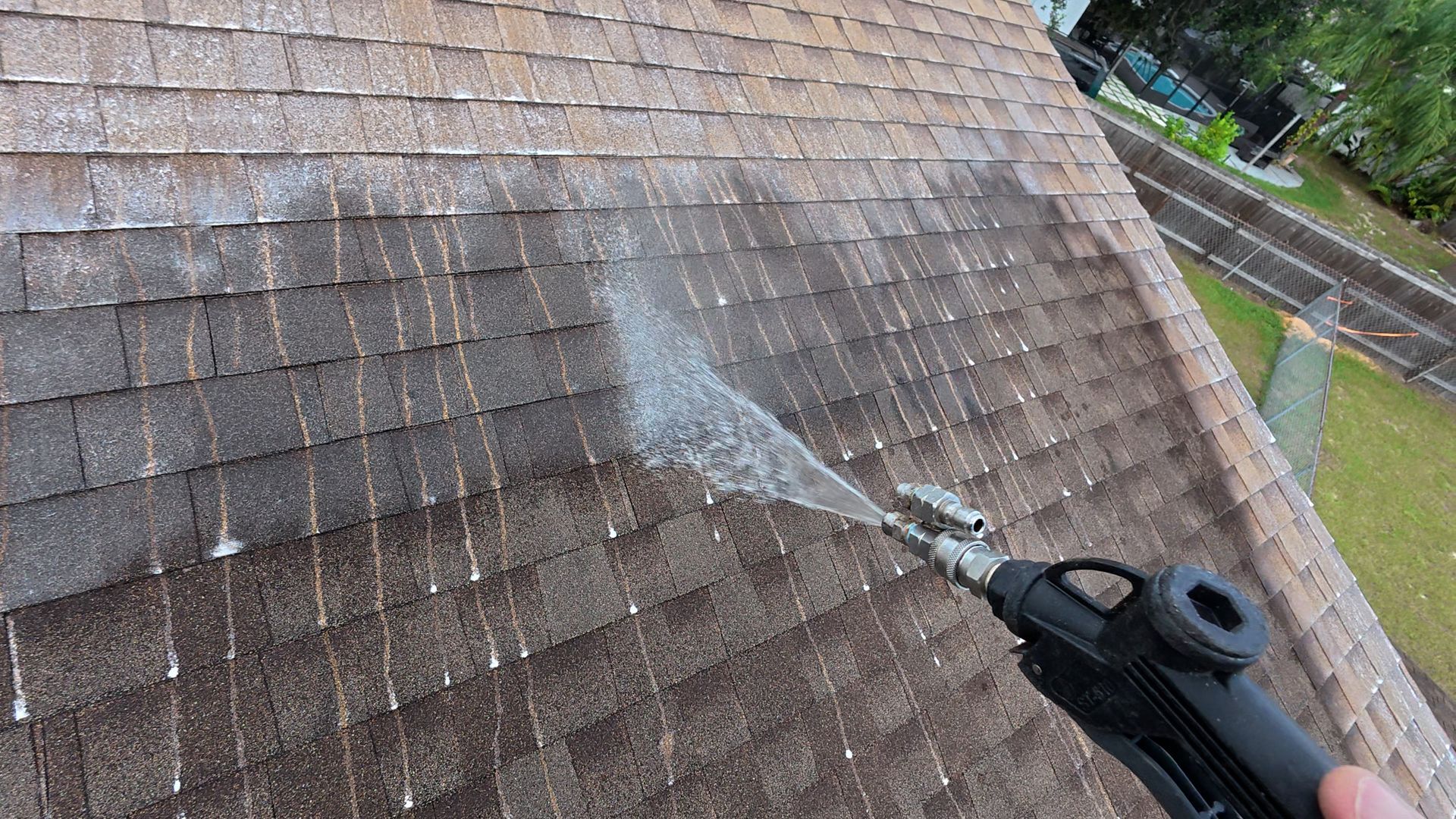
Roof soft wash
By Roy Bielewicz November 26, 2025
Pricing for roof soft washing varies based on several conditions specific to the property. The size of the roof is the most obvious factor, but the shape and complexity of the roofline also play a role.
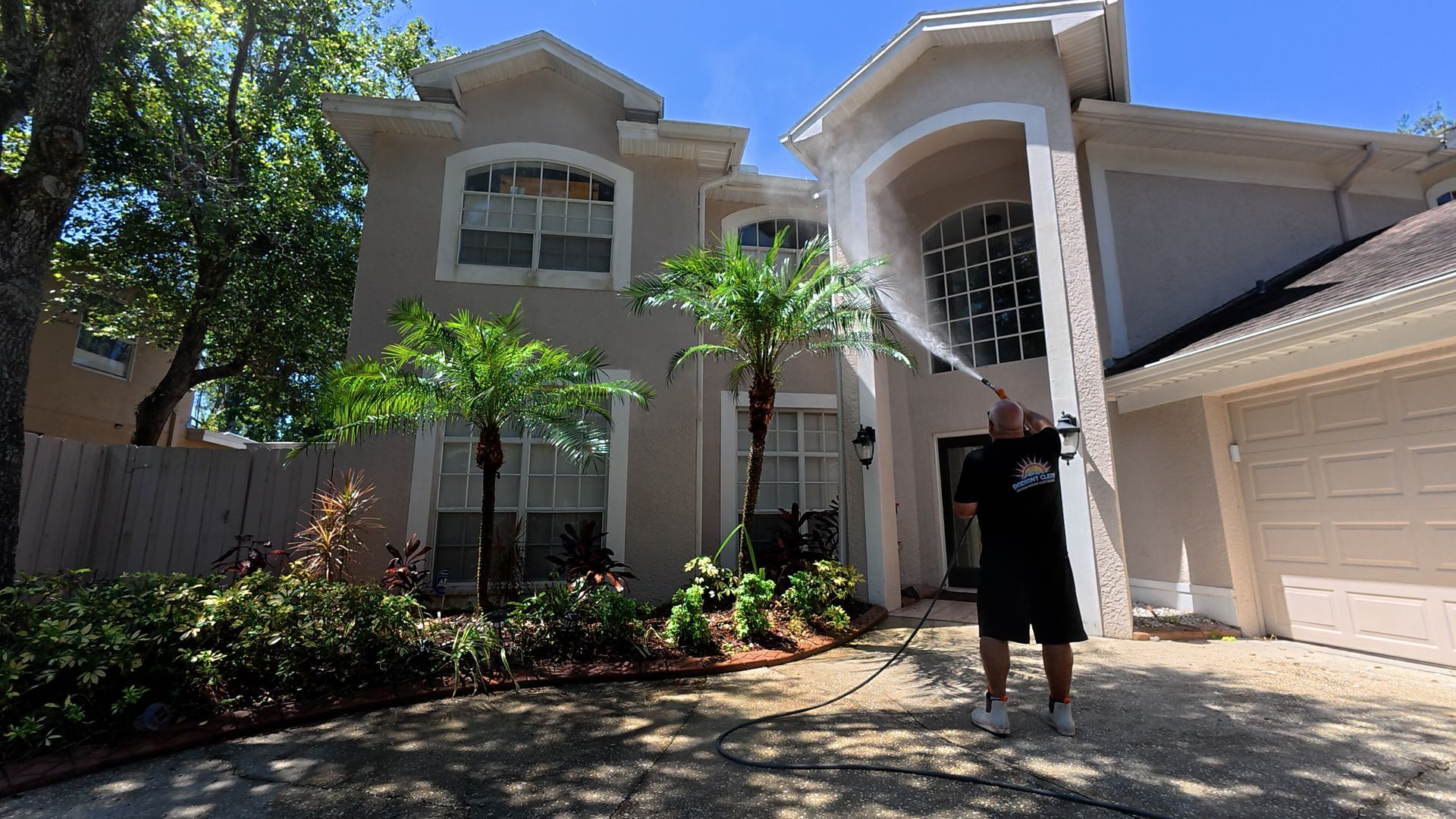
Soft washing a house in Tampa
By Roy Bielewicz November 24, 2025
Soft washing prices vary depending on the size of the home, the level of buildup, and how accessible the exterior surfaces are.
Woman cleaning windows
By Roy Bielewicz November 22, 2025
Window cleaning prices vary based on the number of windows, their size, accessibility, condition, and whether homeowners choose exterior-only or full interior-and-exterior cleaning.
Surface cleaning of patio
By Roy Bielewicz November 22, 2025
If you’ve been looking into exterior cleaning services for your home in the Tampa Bay region, one of the most common questions is: How much does pressure washing cost?
Cleaning a gutter
By Roy Bielewicz November 22, 2025
Many homeowners want to know what gutter cleaning truly costs and what factors influence those prices.
Window cleaning
By Roy Bielewicz November 15, 2025
One of the tools we rely on most is our water fed pole system, a cutting-edge method for cleaning windows and solar panels using pure, deionized water instead of harsh chemicals or detergents.
Show More